What Google actually announced
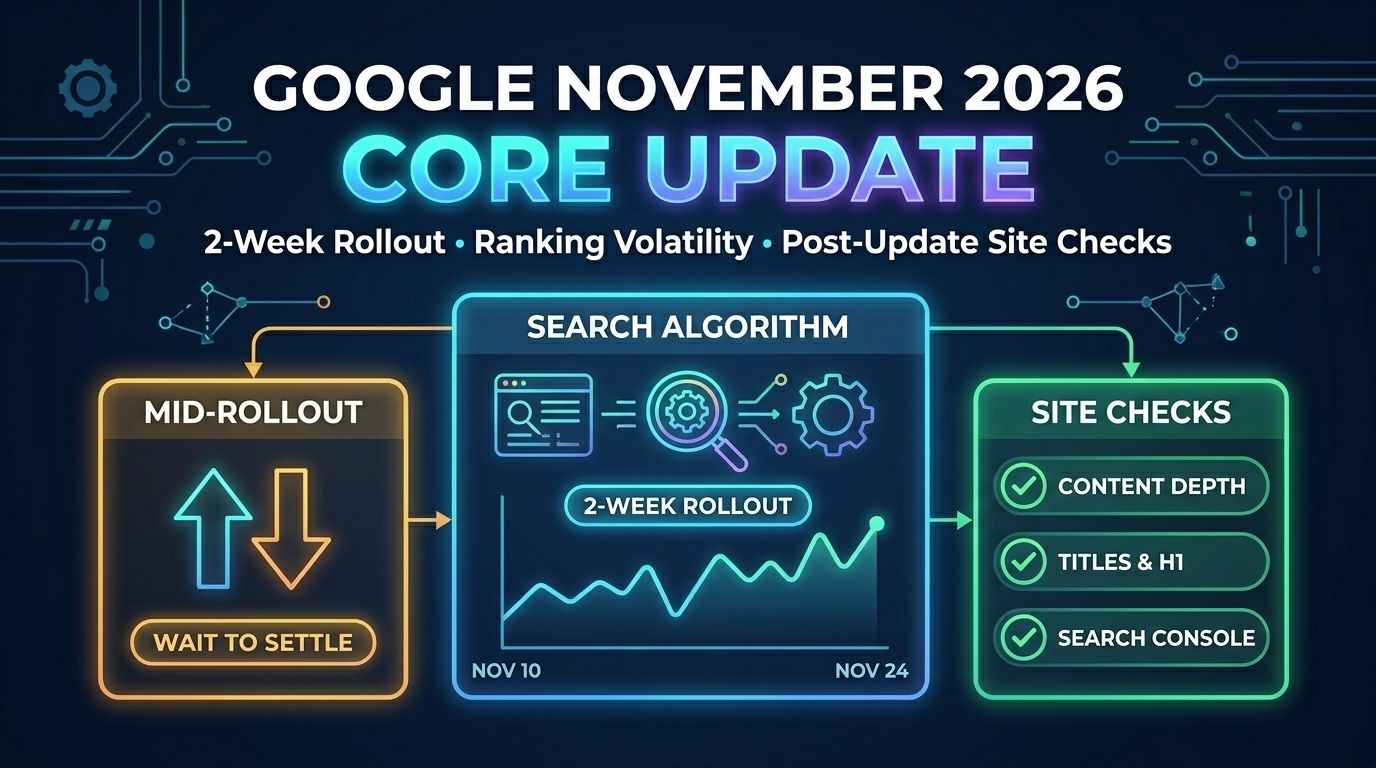
The update appeared on Google's Search Status Dashboard on November 10, 2026, logged as an incident affecting ranking. The entry is short: the update applies globally and to all languages, and the rollout "may take up to 2 weeks to complete." That puts the latest finish date around November 24, two days before Thanksgiving and three days before Black Friday.
That's the whole announcement. There's no blog post naming a target, no list of affected industries, and no new ranking system. This is how core updates usually work. They're broad changes to how Google weighs everything it already looks at, not a penalty aimed at one type of site. If you read a confident claim this week that the update is "about" one specific thing, it's a guess.
Why the timing matters this time
Most core updates land in a quiet month. This one runs straight into the biggest shopping week of the year, so stores and affiliate sites may see rankings move while traffic is supposed to be at its peak. That makes the next two weeks noisy for almost everyone: seasonal demand is changing at the same time as rankings, and it's hard to tell which one moved your numbers.
It also landed the same day Google started rolling out Gemini 4 Carbon in AI Mode for Google AI Ultra subscribers. That's a separate change and only affects a small paid audience for now, but it's a reminder that the search results page is changing in two places at once: the classic ranked links and the AI answers above them.
What not to do while it rolls out
The worst move during a core update is a big rewrite based on a few days of data. Rankings often swing up and down during a rollout before they settle, and a page that dips on day three can recover by day ten without you touching it. Rewriting titles, deleting pages, or restructuring URLs mid-rollout makes it impossible to tell whether the update or your change caused what happens next.
Google's own guidance is to wait until the rollout is marked complete on the Search Status Dashboard, then wait at least another full week before comparing Search Console data against an earlier period. Compare like with like: a week in late November against the same days last year will tell you more than a comparison with early November, when holiday traffic hadn't started.
The questions Google asks of every page
Since core updates don't come with a checklist, the most useful thing to work from is the set of questions Google has published for years about helpful, reliable content. Does the page offer original information, research, or analysis rather than repeating what's already ranking? Does it answer the question fully, or leave the reader to search again? Would someone who landed on it from a bookmark or a friend's link feel they got something worth the click?
A good test is to read the first paragraph of your page out loud. If it spends three sentences restating the question before getting to an answer, that's the kind of padding these updates tend to reward less over time. Getting to the point fast helps with AI answers too, since those features tend to quote pages that state the answer clearly near the top.
A practical check once the update settles
When the rollout is done and the week has passed, open Search Console and sort your pages by the change in clicks. Look at the biggest losers one at a time and ask a narrow question about each: is there now a page ranking above it that genuinely answers the query better? Often the answer is yes, and the fix is to update the content, not the tags around it.
Then check the basics that are easy to let slip: a unique title and meta description for every page, a single clear H1, headings that follow a sensible order, and enough depth to cover what the title promises. None of these will rescue thin content on their own, but broken basics can hold back a page that's otherwise good.
If you lost traffic, how long until it comes back?
Honestly, it depends, and Google is clear that recovery isn't guaranteed. Improvements you make can be picked up over days or months as Google recrawls and reassesses your pages, and some sites only see the full effect at the next core update. That's frustrating, but it also means there's no need to panic-edit this week.
If your traffic held steady or went up, the advice is almost the same: don't treat it as proof that everything on the site is working. Look at which pages gained and what they have in common. That's usually the clearest signal you'll get of what Google currently thinks your site does best, and where to put your effort next.