The Discipline of the Word Count
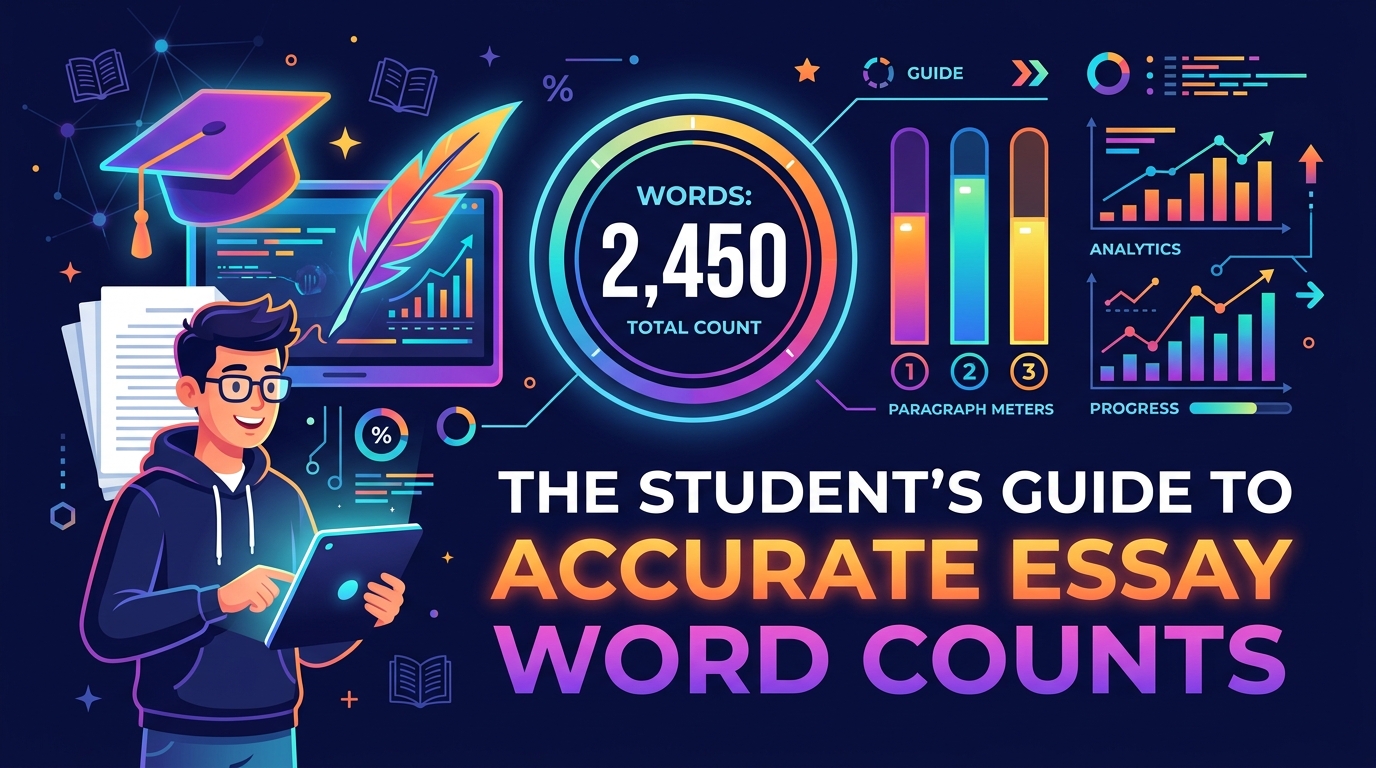
In higher education, the word count is more than just a length requirement; it's a test of your ability to synthesize information. Most universities operate on a strict +/- 10% tolerance. If your target is 3,000 words, being at 3,305 could cost you marks. Being at 2,695 signals a lack of depth.
However, many students aren't aware that different software counts words differently. Microsoft Word, Google Docs, and Scrivener all have slightly different algorithms for handling things like hyphenated words, bullet points, and citations. This confusion can lead to accidental grade penalties.
What Counts and What Doesn't? (The Hidden Rules)
Before you start writing, check your specific department's guidelines for the following items. Every institution is different, and assuming the defaults can be dangerous:
1. **Citations and Bibliographies**: Many professors exclude the reference list from the word count. If you include it in your final check, you might think you've hit your goal when you're actually 200 words short. 2. **In-text Citations**: (Smith, 2023) might count as three words or one depending on the software. Most universities count them. 3. **Footnotes**: These are often a gray area. Some styles include them; others don't.
Using a dedicated word counter like ours allows you to paste specific sections of your essay to get an isolated count, which is much faster than highlighting and checking within a word processor.
The Power of Character Counts for Applications
While essays usually go by words, high-stakes applications (like UCAS personal statements, Medical School resumes, or grant proposals) strictly use character counts—usually including spaces.
Every single 'e' and every single space bar tap is a unit of measurement. This requires a different type of editing. You can't just delete a word; you have to find shorter synonyms for long words (e.g., using 'show' instead of 'demonstrate' saves 7 characters). Our tool provides both word and character counts simultaneously, so you can monitor both targets in real-time without switching views.
Overcoming the 'Halfway' Slump
The hardest part of any essay is the middle. When you're 500 words away from your target, it's easy to get discouraged. Use your word count to set 'milestones' rather than focusing on the finish line. Aim for 200 words per hour of deep work, and check your progress periodically to maintain momentum.
By breaking the task into word-count segments, you reduce the psychological weight of the project and ensure that each section of your argument gets the dedicated space it deserves.
Avoiding 'Filler' and 'Fluff'
When students are short on their count, they often revert to 'padding'—adding unnecessary adverbs or using three words where one would do. This is a mistake that markers see through instantly. It dilutes your message and makes the essay harder to read.
Instead of padding, use our Reading Time Calculator to see if your content feels substantial. If you have 2,000 words but it only takes 6 minutes to read, your sentences might be too simple. Focus on adding complex analysis, more evidence, and secondary sources rather than just more words.
Final Submission Checklist
Always perform your final count on the plain text version of your essay to ensure no hidden formatting artifacts or 'hidden text' is skewing the numbers. Copy your text into a clean environment, check the count, and compare it against your university's specific exclusions.
Remember, a clean, precisely targeted word count shows respect for your marker's time and confidence in your own argument. Good luck with your submission!